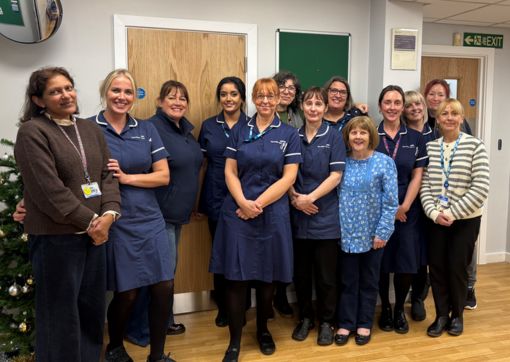
We have been speaking to Nurse Consultant for Palliative and End of Life Care, Abbie Thompson, about what the service covers and how they have been improving care for our patients.
Abbie said: “As you can imagine, there is immense workload pressure with high referral rates, acuity and complexity of need of our palliative patients. I'm immensely proud of my team's dedication to provide an excellent service in improving the quality of life for patients and their families.”
CHFT has a Community Specialist Palliative Care Team in Calderdale who are a dynamic nurse-led service with Clinical Nurse Specialists, team leaders who are all clinical caseload holders, supported by a Care Coordinator. They also have a temporary Palliative Care Home post to target activity in 24hr settings across the locality.
The service is available seven days a week, 09:00 to 17:00, providing phone contact within two days and a visit within five days. They flex workload to meet the urgent needs of patients who may be actively dying or require an urgent assessment for referral to Overgate Hospice.
They are supported by our Consultants in Palliative Medicine for complex symptom management plans, clinical reviews and weekly Multi Disciplinary Team (MDT) meetings.
Abbie adds: “The nurses have excellent communication skills and regularly undertake advance care planning discussions and Recommended Summary Plan for Emergency Care and Treatment (ReSPECT) decisions.
“We have a rolling programme of professional development which includes non-medical prescribing. This has proven invaluable in streamlining timely symptom management interventions, reduces the need for GP intervention and reduces avoidable hospital admissions.”
The Out of Hours (OOH) Palliative Care Team work from 19:00 to 08:00 alongside the OOH District Nursing service, which provides a 24 hour service. This means that Calderdale patients have a seamless transition with palliative interventions and wrap-around care irrespective of their home care setting.
The Hospital Specialist Palliative Care Team equally operate a seven-day service across both sites, with Clinical Nurse Specialists, Support Workers, supported by Medical Admin and Consultants. There is also a dedicated In-Reach Palliative Clinical Nurse Specialist at HRI working with the Emergency Department and Acute Floor. This is supported by The Kirkwood through temporary funding and helps patients to return home with palliative support, streamline patients to Kirklees Community Services and facilitate admission to The Kirkwood inpatient unit or Virtual Hospice.
The End-of-Life Education team support the training and development of Acute and Community teams, and the wider community which gives essential support to colleagues in providing compassionate end of life care.
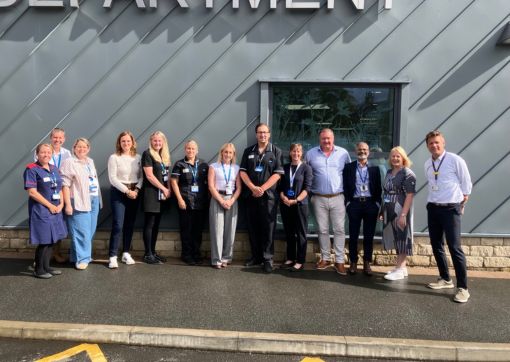
Deputy Chief Executive, Jonny Hammond, went to visit the service earlier this month: "What I got from them is that they are a team who are passionate, with a focus on individual patients, and their relatives, and what is in their best interests. They are hugely flexible within the resources they have and that they have a lot of ideas on how to continually improve the service.
"It can be emotionally difficult at times as they are supporting people's care at the most difficult time. They all support each other brilliantly and really demonstrate our One Culture of Care to each other as well as their patients.”